 |
|
|
| Home | Camp | Pricing and Policy | Map | Contact |
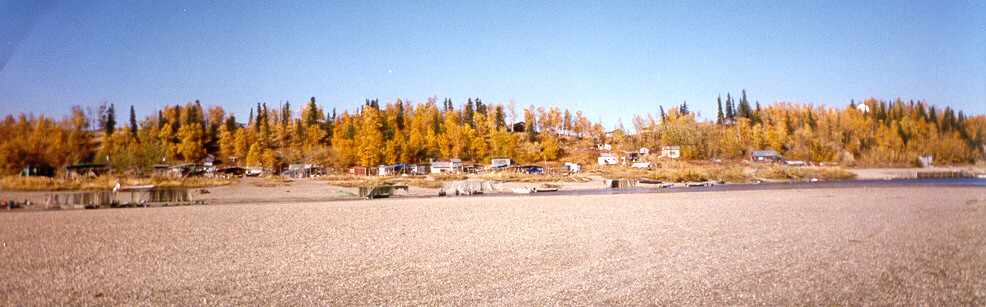
| Shungnak is located on the Kobuk River 150 miles east of Kotzebue, and about 300 miles Northwest of Fairbanks. |
| Shungnak is an Inpuiat Eskimo village with a population around three hundred. Isinnaq is the Inpuiat word for Shungnak which means "Jade." The village is accessible only by small aircraft, by boat in the summer, and by snowmachine (snowmobile) or dog team in the winter. |
| The original settlement was 10 miles upriver at the present location of Kobuk(pop.75). Residents relocated in the 1920's because of riverbank erosion. The Eskimos that live in Shungnak as well as it's neighboring villages Kobuk and Ambler are called "Kuuvanmuitt" meaning Upper Kobuk River People. |
| Many people in the village still have a subsistence lifestyle based on hunting and fishing that has been carried on for centuries. They still make traditional clothing out of animal furs and hides, as well as birch bark baskets and ulus (Eskimo knives). |
| The school employs some people, along with the city and government. There are also seasonal jobs such as construction and forest fire fighting. Most families spend their fall season away from the village at their traditional fish camps to fish, hunt, and prepare food for the long winter ahead. |
| Winter usually begins in late October and
temperatures can reach -60 degrees below zero in January, though -10 to
-20 is more common. The summers are short but
hot and range in the seventies and eighties. Most will agree that the spring and fall are the best times of year due to the moderate temperatures. |
| Communications include telephones, radios, mail planes and computers. There are three churches in the village, and the school has grades from pre-k all the way through twelve. There is also running water in the town and electricity. Shungnak is a dry community, and prohibits the sale and importation of alcohol. |