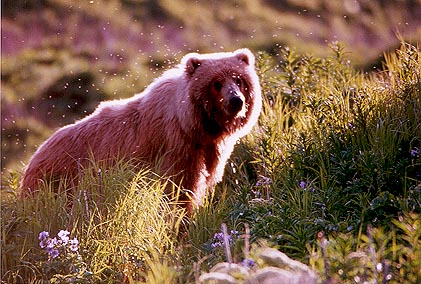
| Because of the abundance of Sockeye Salmon, bear encounters are a common occurence. |
|

|
The Kodiak Brown Bear is the largest of the grizzly bears (URSUS arctos). Large specimens can reach 1500 LBS. |
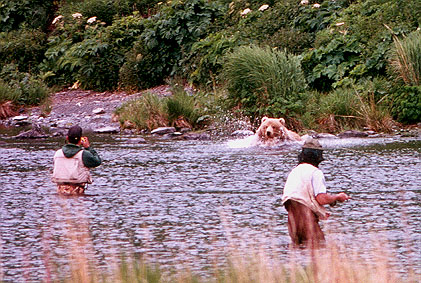
| Kodiak Brown Bears feed almost exclusively on the numerous salmon that spawn in the island rivers. This sometimes puts them in competition with fishermen. |
|
|
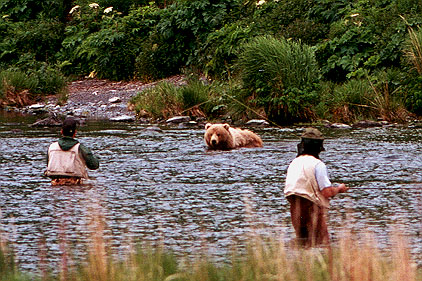
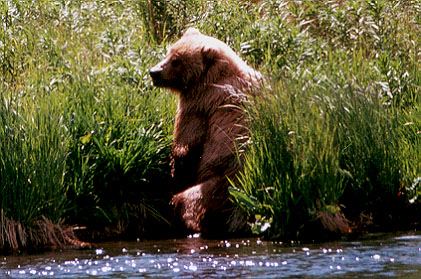
This bear wanted to share in the thousands of Sockeye Salmon that were holding here at the outlet of Karluk Lake. |
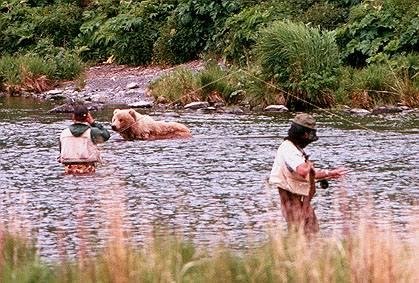
| He was just a little too friendly. I slowly backed away to avoid a confrontation. Though I always carry a .44 Magnum, in seven years fishing in Alaska I have never drawn it on a bear. |
|
|
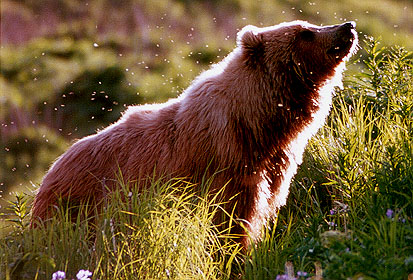
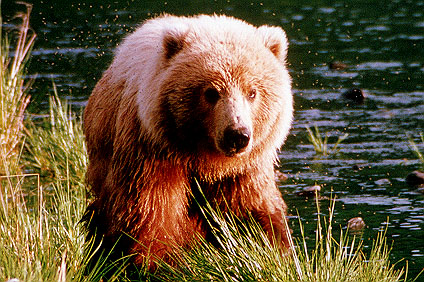
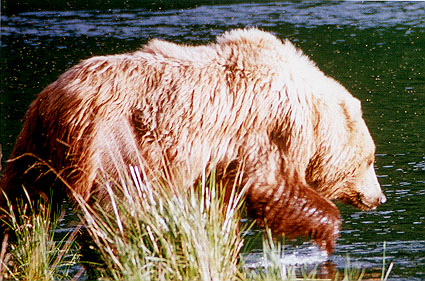
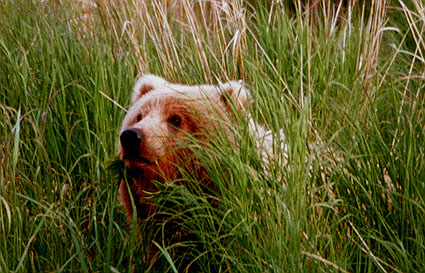
The bears were quite photogenic. My father, Stan Baker was able to get some outstanding shots of this fellow. |
| Though there weren't very many mosquitos, small biting flies were thick. These photos show that the fishermen were not the only ones annoyed by these insects. |
|
|
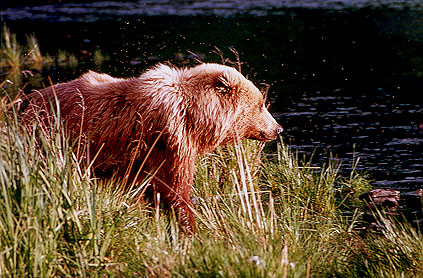
These bears feed mainly on the salmon, but if they can find some fresh steaks or bacon they will gladly partake. This makes them a constant nuisance to campsites. |
| Placing food away from tents and sleeping areas will help avoid confrontations from bears seeking handouts. I place all the cookware on the coolers to noisily alert me if a bear were to decide to visit in the middle of the night. |
|
|
We were fortunate on this trip not to lose any of our food to the bears. Though this has been the exception in my experiences. Thorough planning will include a few cans of beans in case the steaks are claimed by one the bears. I am not going to wrestle him for them. |
|
Sometimes you would think you could walk up and pet some of these wild creatures. Let me assure you, they can be very ferocious. Though there has never been a fatal bear attack on Kodiak Island. UPDATE: In the Fall of 1999, a hunter was killed by a Brown Bear on Afognak Island. This was the first recorded fatal attack on the Kodiak Archipelago in history. |
|
|
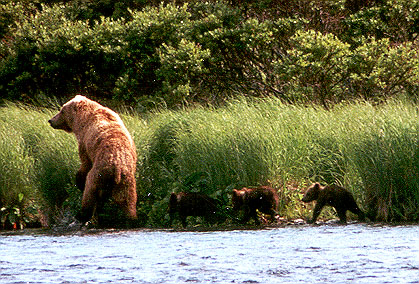
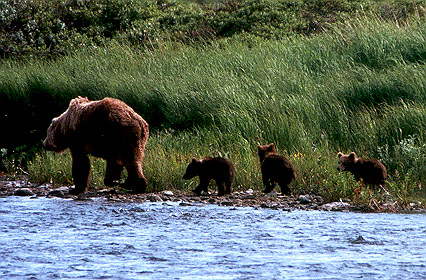
The most dangerous bear is a mother defending her cubs. Here Dad was able to capture this sow with three young cubs in trail. |
|
The typical brood is two, but a sow with three cubs is quite common. Cubs usually stay with their mother for two full years. The opportunity to witness these majestic animals is as much a part of the experience as the fishing. |
|
| Benjamin K. Baker | Copyright ©: 1999, Far North Management Corp. |
| (907) 488-6388 | Revised -- 11 Jan 00 |
| 3163 Carl St. North Pole AK 99705 | URL: http://www.alaska.net/~bakerb |
| bakerb@alaska.net |