)
)
)
)
)
The closed water system emulates the circulatory system of a living organism, providing homeostasis, nutrient/energy distribution and waste removal functions. Details
|
| An award-winning
design for an integrated bioshelter providing a high degree of self-sufficiency
at competitive cost. The project was originally undertaken (1) as proof of concept for a full reuse, closed water system, and (2) to act as a live-in laboratory, allowing continuing development and testing of various system components.
The closed water system emulates the circulatory system of a living organism, providing homeostasis, nutrient/energy distribution and waste removal functions. Details |
|
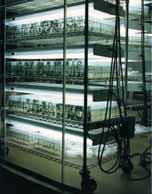
Mechanical system for a controlled environment commercial plant growth chamber at Anchor Point, Alaska. Temperature, humidity, carbon dioxide, and light levels are automatically controlled. No auxiliary heating or cooling equipment was installed in the facility: instead, temperatures are maintained by storing waste heat from the HID lights in phase-change materials during the "on" cycle, to be released to the growing space during the "off" cycle. Details
CLIENT: Anchor Renewable Farms, Anchor Point, Alaska |
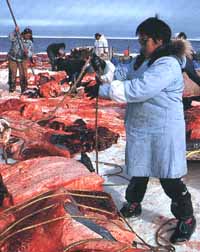 |
Design for a Passive Environmental Freezer for the village of Holy Cross, Alaska. An electronic control system operates dampers to store the winter "cold" in brine tanks, to keep meat and fish frozen throughout the summer months without electricity. (Subsequent projects include freezers for villages of Gulkana, Mentasta and Chitina - conceptual designs only, for these villages.) Details
CLIENT: Tanana Chiefs Conference, Fairbanks, Alaska |
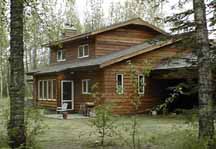 |
Design for an earth sheltered house with seasonal heat storage capacity and passive (hybrid) solar-powered heat transfer system.
The design is unique in that, where conventional passive solar houses are designed to collect and store heat for a matter of hours, or a few days at most (and require daily temperature swings to store and release that heat), this house can cost-effectively store and utilize heat collected during the summer (when it is abundant) for use in the winter. Details CLIENT: Frank and Joann Price |
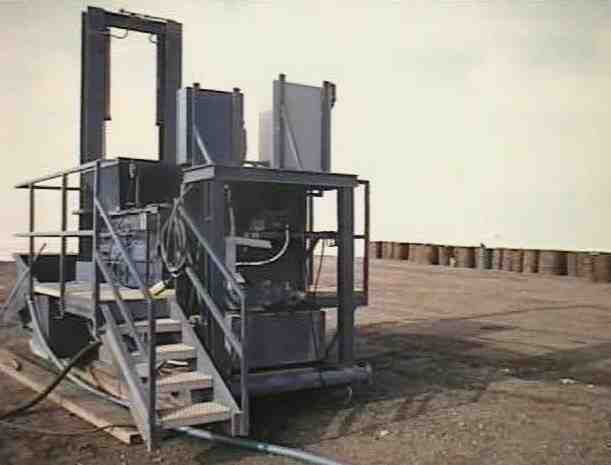 |
Design of a system to separate non-biodegradable solids (diapers, plastic
bags, 2x4's, beer cans, toys, etc.) from organic wastes, prior to discharge
into a sewage lagoon. (Notice the hundreds of barrels of shit in
the background.) Details
CLIENT: Alaska North Slope Borough |
 |
CLIENT: Minch, Ritter, Forest, Architects, Juneau, AK |
| |
Paper presented at Ecological Engineering for Wastewater Treatment
international conference, Stensund Folk College, Sweden, March 1991.
Abstract: A plan for a community-scale integrated greenhouse/waste treatment facility is proposed. The facility would use biogas produced from the anaerobic digestion of organic wastes to generate electricity, heat, light, and carbon dioxide for enhanced plant growth in a controlled environment. A design procedure and calculations are provided. Assumptions include: 1) Methane yield > 30 standard cubic meters/kg volatile solids added (SCM/kg VS), 2) methane-to- electricity conversion efficiency > 28%, 3) total recoverable energy from combustion of methane > 80%. Details |
| |
Design for a clinic/washeteria for a remote Alaskan village.
The design incorporates heat recovery from multiple sources, including
primary power diesel generators, exhaust building ventilation air, and
hydronic dryers.
CLIENT: Birch Creek Village Council, Birch Creek, Alaska |