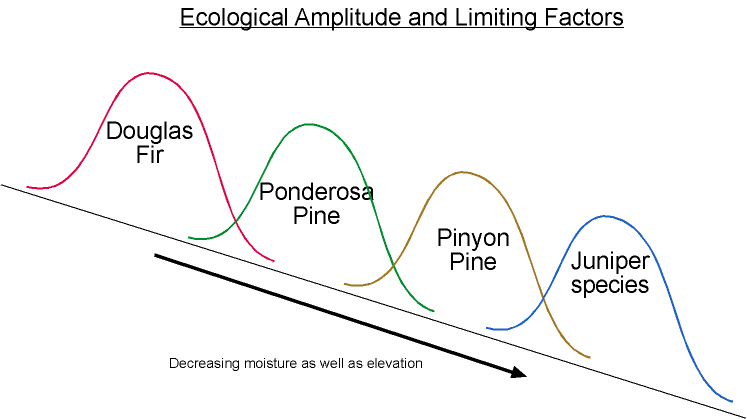
In this example, four southwestern tree species' ecological amplitudes (ranges) are represented as bell curves. Generally, Douglas fir occurs at higher elevations or in areas with greater available soil moisture as compared to the other three species. However, Douglas fir can grow with ponderosa pine at its (Douglas fir’s) lower ecological limit, therefore ponderosa pine's upper ecological limit. The same general rule applies to ponderosa pine and pinyon pine. Ponderosa pine growth is limited by moisture, and therefore its range does not significantly overlap the range or amplitude of pinyon pine. For all four species, growth is limited by available moisture. At juniper's lower ecological limit are the desert scrub lands.
Ring width of these trees at their lower ecological limit are highly variable and often times rings are quite narrow. Towards the lower limit growth of these tree species, locally absent rings are more common as growing conditions become more variable or difficult. Also, all measured ring-width statistics (such as mean sensitivity and intra and inter series correlation) increase towards the lower limit of tree growth for these species.
This is the classic ecological amplitude example.